Sunday, August 29, 2010

The Treatment of Space and Structure in 2D artworks: Chen Chong Swee


Top: Chen Chong Swee, Scenery, 1980, Chinese Ink and Colors.

Bottom: Chen Chong Swee, Village Scene, 1980, Chinese Ink and Colors.

What you need to know about the artist (key points):

Born 1910, Died 1985
  • was the first in attempting a synthesis of distinctive aesthetic traditions of East and West. This became known as the "Nanyang School" Chinese painting style.
  • One of the founding members of SG's Watercolor society.
  • took a lot of trips to Bali and Malaysia for inspirational scenes of what is authentically Southeast Asian: was one of the 4 artists who went on the historic "Bali Trip" (Liu Kang, Chen Chong Swee, Chen Wen Hsi, and Cheong Soo Pieng). This trip not only provided material for visual expression that is uniquely Southeast Asian but also revealed Southeast Asian art as ritualistic, experiential and decorative.
  • was a large contributor to written reviews and reflections of works and trends in art. One such issue that he wrote on discussed the fundamental differences between Eastern and Western art, and the need to develop traditional Chinese painting as to be relevant to the multicultural environment of the time.
  • Was the first artist to incorporate the local subject matter of Singapore into Chinese Ink Painting. This is HUGE!
  • Chen Chong Swee believes that there are 6 principles, all of which must be sustained, in the ink painting tradition:
  1. Spirit Resonance and Life Movement
  2. Bone Manner (structure): use of the brush
  3. Conform with the Objects to give likeness
  4. Apply the colors according to the characteristics
  5. Plan and design (composition)
  6. To transmit models by drawing
He believed that a student of ink painting needed to fully comprehend all the six principles in order to create a good ink work.

Chen Chong Swee believed that
*Art is a part of life and cannot exist independently from real life. If it fails to be accepted by another (as it is subjective), it looses its essence of universality and can no longer exist as art*

Treatment of Space in a 2D artwork: Dede Eri Supria


Top: Dede Eri Supria, Labyrinth, 1987-88, oil on canvas.

Bottom: Dede Eri Supria, Between the Red Steel, 1992, oil on canvas.

What you need to know about the artist and his artwork:

Born: 29 January 1956, Jakarta
Nationality: Indonesian
History:
キ 7th of 11 children
キ burst into the Indonesian art scene in the 1970’s
キ considered innovative for the discussions that his art brings up
キ uses objects to represent social issues (Symbolism)
キ an idealist painter: paintings must have beauty & content
Common themes in his work:
o Population & living environment
o Terrorizing products
o Crossroads of emancipation
(freedom)
o Peace & war
o Urban violence
o Manpower
o Industrial pollution
o Human Rights
キ Particularly, the Urbanization of his beloved hometown, Jakarta.
キ During WWII, the Allies dubbed Jakarta as the “treasure of Asia”.
キ People here depended on the earth & had a very harmonious relationship with her.
キ Since the war, Jakarta has become extremely built up & is now a large urban city.
キ Iron & concrete now trample the fertility of Jakarta’s soil.

In Labyrinth notice the use of brand names that make up the walls of the maze.

Discussion:

The use of color is very important in Supria's work. In Labyrinth he uses primary colors, and in Between the Red Steel, the red is overbearing. Why do you think that Supria used these color schemes for his work?

Monday, August 23, 2010

Design: The Esplanade


Vikas Gore, The Esplanade Theatres by the Bay, 2002, architecture

What you need to know about the artist and the work:

Vikas Gore is the leading architect on the Esplanade

The inspiration for the shape could be a durian or the eyes of a fly

The "spikes" are really sun shades. This came about as the original design was made of 2 glass domes, but in a tropical climate, these become like greenhouses maintaining all the heat. The sun shades were added to deflect the sun and protect the structure.

Please see the accompanying handout distributed in class for more info on Vikas Gore. Read through the whole thing please.

Design: Philippe Starck


Philippe Starck, Juicy Salif (Lemon Squeezer), 1990, product.

What you need to know about Philippe Starck:

Has always been a tinkerer.

Designs hotels and restaurants as well as products, and pays as much attention to what isn't there as to what IS there.

Shows Bauhaus influence:

What is the Bauhaus?
Click here to learn!

Idea of form AS function in his design, as well as design for mass-production.

For this particular artwork, he was inspired by a meal that he was eating that had squid in it. He was literally squeezing the lemon onto the squid when he had the idea. It is a bit of a whimsical or playful artwork, in that the lemon is squeezed over the squid, as it is when one eats squid.

Visit the artist's personal website at http://www.starck.com/ to learn more about the artist and see his other works.

For discussion:

Please choose a work that interests you from his website. Where do you think his inspiration comes from?

After reading Starck's biography, how do you think that his past and his personality have influenced his artworks?

Tuesday, August 17, 2010

Cultural Commentaries: Traditions and Heritage: Montien Boonma


Montien Boonma, Buffaloes from the Field to the Town, 1988, mixed media.

What you need to know about the artist:

Boonma's works are always about the change that has occurred in Thai life.

Like the rest of Asia, Thailand has gone through a rapid phase of modernization in the last 50 or so years. This type of rapid modernization has a great impact on the people who live through it, as they witness the demise or decline of one way of life and the birth and fruition of another. Many times this type of change is met with hostility.

In his artwork, Boonma juxtaposes the old with the new: we have manufactured stools placed with old gunnysacks that could be found in the more rural areas, with corn husks, another material found in rural areas, and finally a buffalo horn. While the abstracted and simplified Buffalo forms have been created from all natural materials, because some are manufactured it creates both tension and harmony between the old and the new.

The significance of the Buffalo in rural Thailand is huge. In rural areas, even in modern times (but less frequently as modern farm equipment is more readily available), water buffalo are used to help plow the rice patty fields, and in many villages are seen as a sign of wealth. They were once essential for a farmer's success.

Boonma also claims that his artwork is environmental. By using primative and natural materials, he hopes to get viewers thinking about environmental problems, and perhaps awareness will be heightened.

Questions:

1. In your opinion, how is this work environmental? (or is it?) Support your answer with contextual information.

Cultural Commentary: Traditions and Heritage: See Hiang To


See Hiang To, Malay Man with Wayang Kulit, 1977, Chinese Ink.

What you need to know:

Wayang is the Indonesian word for theatre.
Wayang Kulit is the most widely known type of wayang, and is a shadow puppet theatre.
This type of theatre uses light and shadow, and the puppets are made of leather and placed on bamboo sticks.

It is thought that the Wayang Kulit began with the influence of Hinduism in Indonesia in the first century CE. When Muslim influence came to Indonesia, the Wayang Kulit suffered censorship due to it's portrayal of Gods in its stories.

The Tok Dalang, similar to a puppeteer, is the mastermind behind the show. He narrates the story using voice inflections from behind the screen. There is orchestra music in the background.

Here's a taste of what the Wayang Kulit is:
http://www.youtube.com/watch?v=IJGE3m7BEng&feature=related

Historically, people of Malay decent have been living on the island of Sumatra. It therefore may be inferred that it would not be uncommon for a Malay man living in Indonesia to take up the art of the Wayang Kulit.

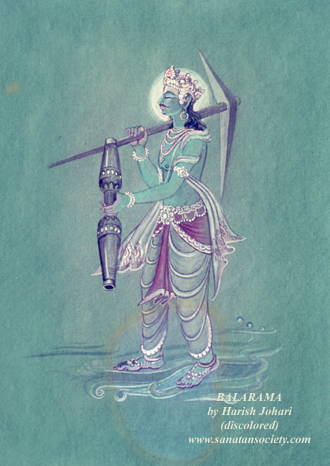
The man is wearing a songkok, a hat traditionally worn by Muslim men, and typically worn with traditional clothing. While it is difficult to tell what exactly the puppet is, it has striking similarities to depictions of the Hindu God Balrama. The coloring (green), headress worn, and even the style of pants are very similar. Click here for an image of Balrama. This creates a juxtaposition, or conflict of interests, as we know that the religion of Islam does not allow for the use of Hindu Gods and Godesses in Watyang Kulit. How you interpret this is completely up to you.

Furthermore, there is Chinese writing on the side of the page. With so many aspects of widely distinct culturals present in this work, it could be a commentary on the diversity of cultures that are represented in Indonesia, around 300, a melting pot that has been developing for centuries.

Social Commentaries: Ways of Life: Tan Tee Chie


Tan Tee Chie, Brobak Birds Competition, 1966, Woodcut

What you need to know about the artist & artwork:

  • Tan Tee Chie was a graduate from NAFA in 1951 and became a lecturer there.
  • Uses traditional 1-point perspective.
  • Documents an Asian pastime: bird competitions were, and still are in some places, a form of entertainment. The birds are judged on their singing abilities, and as birds are eliminated from the competition their cages are removed from their stands.
  • Singapore still has these competitions regularly.
  • Is a way to document the everyday and to preserve traditions for future generations.
What is woodcut?
  • woodcut is a type of printmaking technique where the artist removes the areas that he/she wants to keep white. The ink is applied only to highest surface on the block of wood, or those NOT carved away. Typically, artists will use line (like hatching and crosshatching in ink, except that they would carve away what they want to be white) to create values and depth, although Tan Tee Chie's woodcut is relatively flat lacking in tonal values.